
Embedded Systems · 3 min read
UART, SPI, I²C and CAN Interface Selection
Four common interfaces, four very different strengths. Choosing well simplifies both hardware and firmware.
NANOSOFT Engineering Insights
UART
Asynchronous, point-to-point, two wires plus ground. Simple and universal, ideal for debug consoles, modules and — with RS-232 or RS-485 transceivers — longer-distance links.
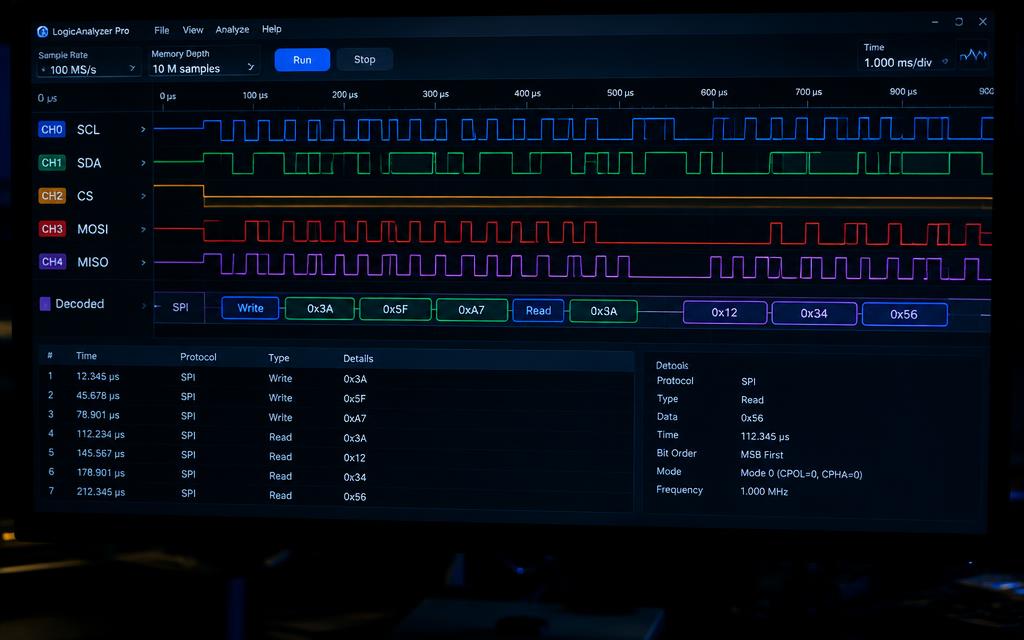
SPI
Synchronous, full-duplex and fast, with a chip-select per device. Excellent on-board for ADCs, displays and memory where throughput matters. Not intended for long cables.
I²C
Two-wire, addressed, multi-device bus at moderate speeds. Ideal for sensors, EEPROMs and configuration devices on the same board. Sensitive to capacitance, so keep it short.
CAN
Differential, multi-master, with built-in arbitration and error handling. Designed for noisy environments and distributed systems such as vehicles and industrial machines.
Choosing
- On-board, high throughput: SPI
- On-board, many simple peripherals: I²C
- Simple module link or debug: UART
- Between boards in noisy environments: CAN or RS-485
Frequently asked questions
Working on something similar?
Tell us about your application and we'll respond with practical engineering next steps.
Have a custom electronics project in mind?
Share your requirements and get a structured engineering response from our team.