
Product
Ultrasonic Cleaner Circuit
Customisable ultrasonic generator electronics built around your transducers, tank and control requirements — with protection and usability designed in from the start.
Technical overview
How it works.
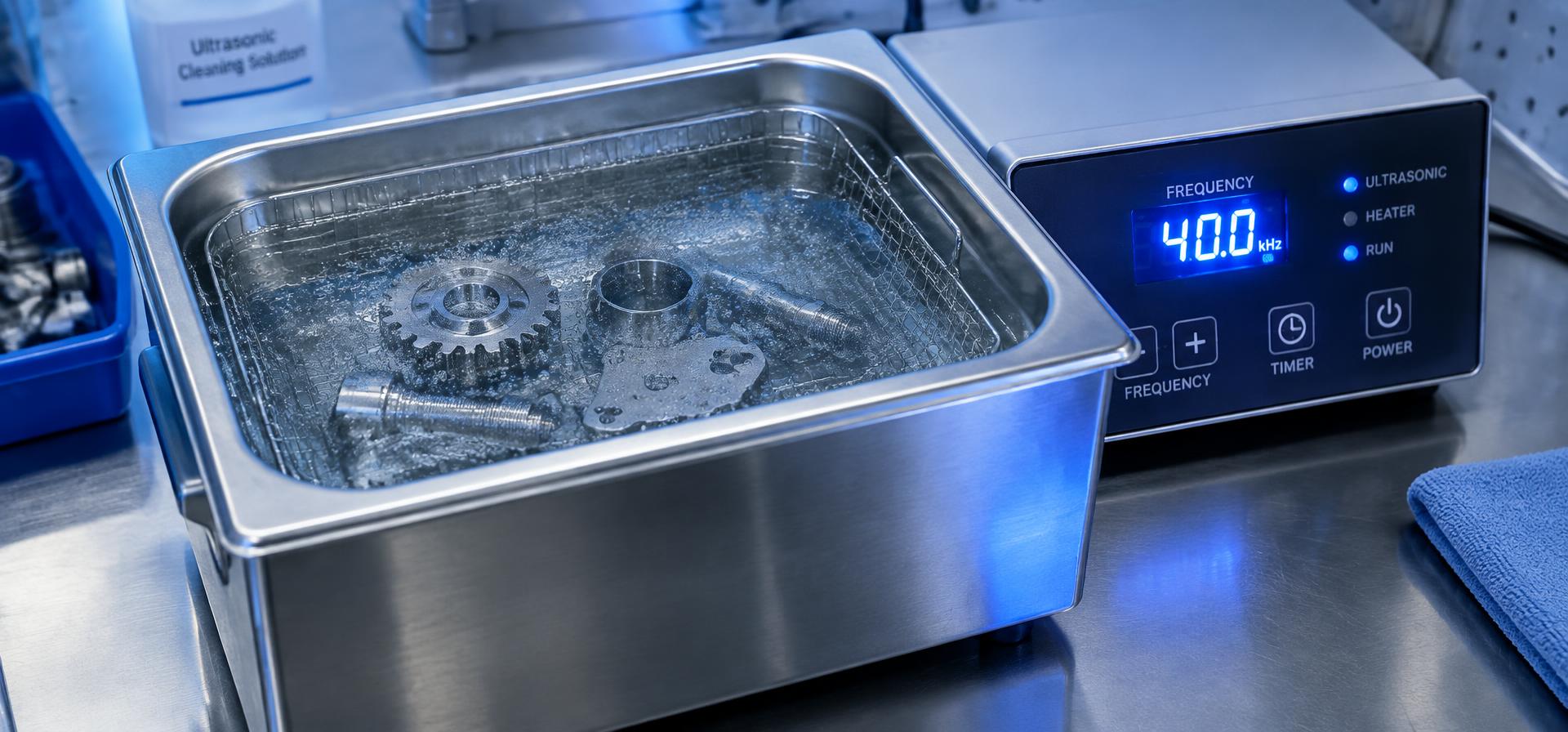
Ultrasonic cleaning relies on cavitation: high-frequency acoustic energy, generated by piezoelectric transducers bonded to the tank, creates microscopic bubbles in the liquid that collapse and dislodge contamination from surfaces.
The generator circuit is the heart of the equipment. It must drive a reactive, temperature-sensitive load at or near resonance, deliver controlled power, and protect itself and the transducers under changing tank conditions. NANOSOFT engineers ultrasonic driver boards matched to your transducers, power level and user-interface needs.
Power stage
Switching power stage (e.g. half-bridge or full-bridge topology) with an output transformer and matching network sized for the transducer array.
Frequency control
Operating frequency set and tracked around transducer resonance; optional sweep to reduce standing-wave effects in the tank.
Power regulation
Adjustable power level and soft-start so the system behaves predictably across load and liquid conditions.
Protection
Over-current, over-temperature and abnormal-load handling to protect switching devices and transducers.
Simplified for illustration. Actual architecture is defined per project.
Applications
- Industrial parts and component cleaning tanks
- Laboratory and benchtop ultrasonic baths
- Jewellery, optical and precision-part cleaning
- Electronics assembly cleaning equipment
- Medical and dental instrument cleaning devices (subject to the OEM's regulatory process)
- Custom multi-transducer industrial systems
Customisation
- Transducer frequency (for example 28 kHz, 40 kHz or other) and quantity
- Required output power and duty profiles
- Sweep, degas or pulse modes
- Heater control and temperature sensing
- Keypad, display and timer behaviour
- Safety interlocks and certification requirements of the end product
Integration
- Board layout separating high-power and control sections
- Thermal design and heatsinking aligned with the enclosure
- Connector and wiring strategy for transducers and heaters
- Firmware for modes, timers, fault reporting and service settings
FAQ
Ultrasonic Cleaner Circuit questions
Inquiry
Discuss your requirements.
Tell us about your sensor or transducers, power, interfaces and quantities. Attach drawings privately if helpful.
Have a custom electronics project in mind?
Share your requirements and get a structured engineering response from our team.