
Embedded Systems · 3 min read
Hardware–Firmware Co-Design for Embedded Products
When hardware and firmware teams work in sequence, each inherits the other's compromises. Co-design avoids that.
NANOSOFT Engineering Insights
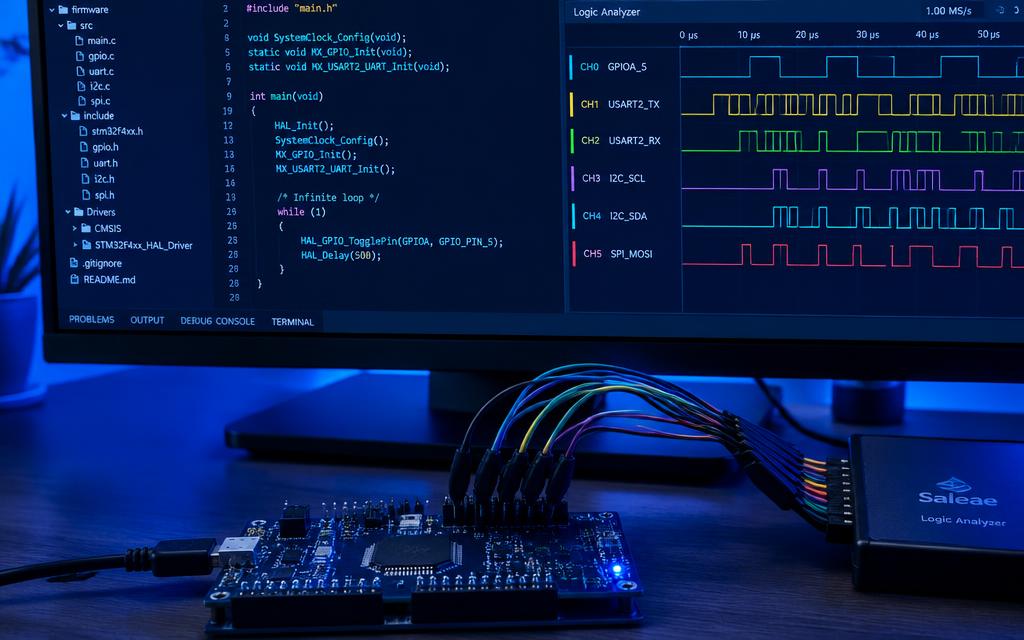
The cost of designing in sequence
If hardware is finalised before firmware is considered, firmware engineers often discover that a timer is on the wrong pin, an interrupt is shared or an ADC channel is unavailable. Workarounds add complexity and risk.
Joint pin and peripheral planning
A shared pin-map, reviewed by both disciplines before layout, ensures that peripherals are used as intended — DMA-capable channels for high-rate data, hardware timers for precise PWM, and spare pins reserved for debug and future features.
Timing and power
Control loops, sampling rates and communication latency must fit together. Power states — sleep, standby, active — need hardware support (switchable supplies, wake-up sources) and firmware logic designed as one.
Testability and updates
- Debug and programming headers on every prototype
- Test points for key signals
- A field update mechanism planned in from the start
- Self-test routines for production and service
Making it practical
Co-design does not need heavy process. Regular joint reviews, a single shared requirement document and a living interface specification are usually enough.
Frequently asked questions
Working on something similar?
Tell us about your application and we'll respond with practical engineering next steps.
Have a custom electronics project in mind?
Share your requirements and get a structured engineering response from our team.