
Flow Measurement · 3 min read
Flowmeter Electronics: Noise, Calibration and Integration
Getting a clean flow signal is half the job. The other half is calibration and integration into a product that works in the field.
NANOSOFT Engineering Insights
Know your noise sources
Each requires a different countermeasure — filtering, synchronisation, shielding or layout separation.
- Electrochemical noise at the electrodes
- Mains-frequency interference and its harmonics
- Slurry or bubble noise in the process liquid
- Switching noise from the coil driver and supplies
Design choices that reduce noise
Selecting an excitation frequency that is not a sub-multiple of mains frequency, sampling in settled windows, and averaging across cycles all improve stability. Physically separating the coil-driver section from the electrode front-end on the board is equally important.
Planning calibration
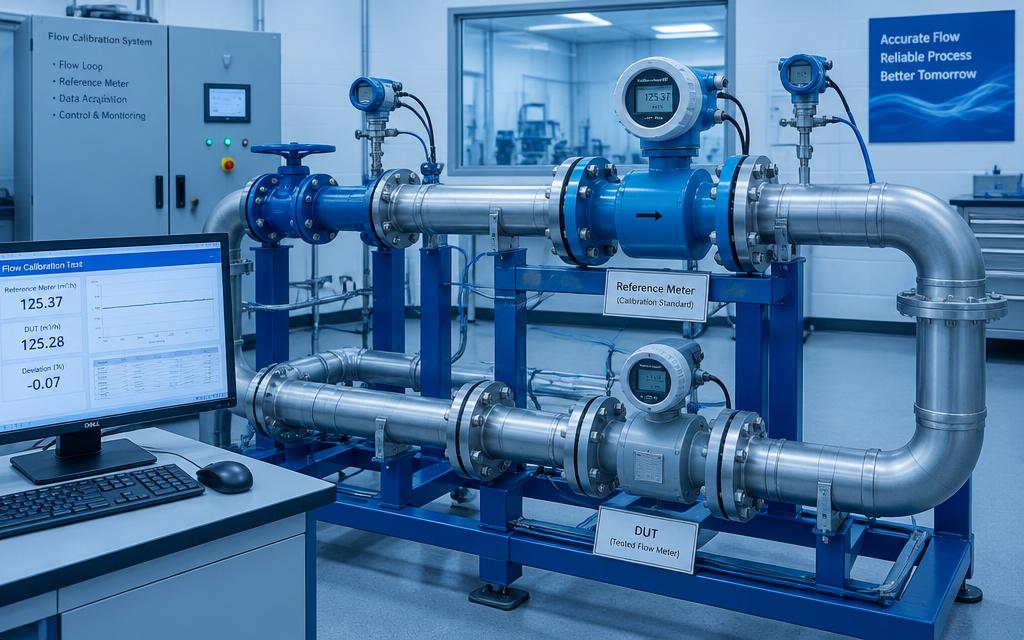
Calibration relates the electronic reading to actual flow. It is typically performed on a flow rig against a reference meter. Electronics should provide stored calibration constants, a convenient service interface and traceable records.
Integration into the instrument
Mechanical
Board shape, connector positions and cable entry must suit the transmitter housing.
Electrical
Grounding of the sensor body, cable shields and the process liquid needs a consistent scheme.
Firmware
Configuration parameters, diagnostics and outputs must align with how operators will use the meter.
Frequently asked questions
Working on something similar?
Tell us about your application and we'll respond with practical engineering next steps.
Have a custom electronics project in mind?
Share your requirements and get a structured engineering response from our team.